Osmania General Hospital (OGH), located on the banks of the Musi River in Afzal Gunj, Hyderabad, stands as one of India’s oldest and most iconic public healthcare institutions.
Established during the era of the Nizams, it has served generations of patients, particularly the underprivileged, while embodying a rich architectural heritage.
As of 2026, the hospital is undergoing a significant transformation with the construction of a modern facility, balancing preservation of its historic structure with the demands of contemporary medicine.


Historical Legacy
The roots of OGH trace back to 1866, when the Afzal Gunj Hospital was founded by Salar Jung I, Prime Minister under the sixth Nizam. Following the devastating Musi River floods of 1908, the last Nizam, Mir Osman Ali Khan, commissioned a new hospital on the current site.
Designed by British architect Vincent Jerome Esch in the Indo-Saracenic style featuring domes, arches, and ornate details—the building was completed in 1925-1926 at a cost of ₹20 lakh.
OGH holds several milestones: It was associated with the Hyderabad Medical School, where Nobel laureate Sir Ronald Ross discovered the malaria transmission mechanism.
It also nurtured Rupa Bai Furdoonji, the world’s first female anaesthetist. For decades, it was Hyderabad’s tallest building and a symbol of the Nizam’s progressive vision for public health.
Services and Role in Healthcare
Run by the Government of Telangana, OGH is affiliated with Osmania Medical College and offers comprehensive medical and surgical services across specialties.
With around 1,168 beds historically, it handles high patient volumes, providing affordable or free care to the poor and middle-class. It includes modern facilities in diagnostics, surgery, and emergency care, serving as a critical referral center for the region.
Challenges and Controversies
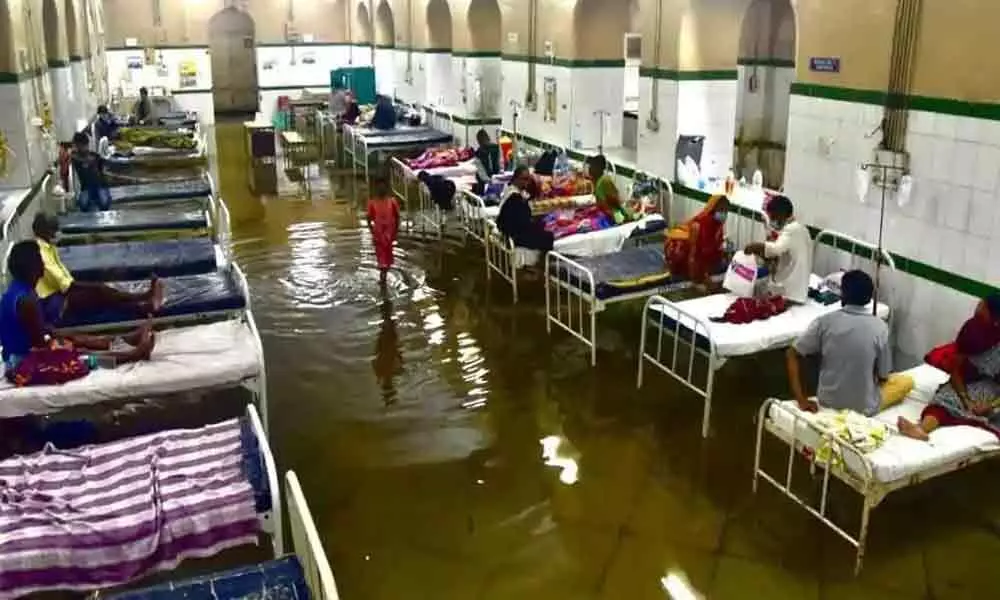
Over the years, the heritage building faced structural issues due to neglect, flooding (notably in 2020), and aging infrastructure. Debates raged over demolition versus restoration, with heritage groups like INTACH advocating preservation under HMDA regulations.
The inpatient block was closed in 2020 for safety. Previous governments proposed demolition, sparking protests from conservationists who argued minor renovations could suffice.
In 2024, the Telangana government decided against razing the iconic structure, opting instead to preserve it while building anew.
READ ALSO:- Top 5 Hospitals in India – Centers of Excellence in Healthcare
The Future: A Modern Replacement
In a landmark decision, Chief Minister A. Revanth Reddy laid the foundation stone on January 31, 2025, for a new 2,000-bed OGH at Goshamahal (on the site of the former police stadium), spread over 26 acres.
Costing an estimated ₹1,667-2,700 crore, the state-of-the-art facility will feature advanced operation theatres, robotic surgery, and enhanced patient amenities.
Construction began in October 2025 by Megha Engineering & Infrastructures Limited, with a targeted completion in 30 months (by mid-2028), though directives aim for acceleration.
The original heritage building will be retained and potentially restored, possibly for administrative or educational use, ensuring Hyderabad’s architectural legacy endures alongside improved healthcare access.
Osmania General Hospital exemplifies the intersection of history, heritage, and public service. As it transitions into a new era, it continues to symbolize hope and healing for millions in Telangana.